

 +86-75523573416
Effetto fisico del calore sui materiali durante il processo di molatura e saldatura
2020-10-26Grind and Welding process and their effects on the physical properties of materials.
Il grind and welding process is usually performed to enhance the material surface and join two materials together. Metals usually receive a grind and welding process. But there are other materials too. Such as ceramics and plastics.
Since metals are good conductors of heat, they sustain some physical effects due to these processes because of the high temperature involved. This high temperature not only acts as an additional load on the materials but also alters the mechanical properties of the workpiece.
Welding is a high-temperature process that joins similar metals by fusion. While a workpiece undergoes grinding to smoothen its surface. The heat source in a grinding process is friction. The prolonged contact between the grinding wheel and the surface gives rise to this friction.
Intro to Grind and Welding Process
Grinding is classified as an abrasive machining process. A machining process is any process that removes a certain part of the raw material using cutting tools. Since small, abrasive particles perform cutting in this process. Therefore, it is called an abrasive machining process.
A workpiece requiring a smooth surface finish undergoes grinding. Usually, metals and ceramics go through this process.
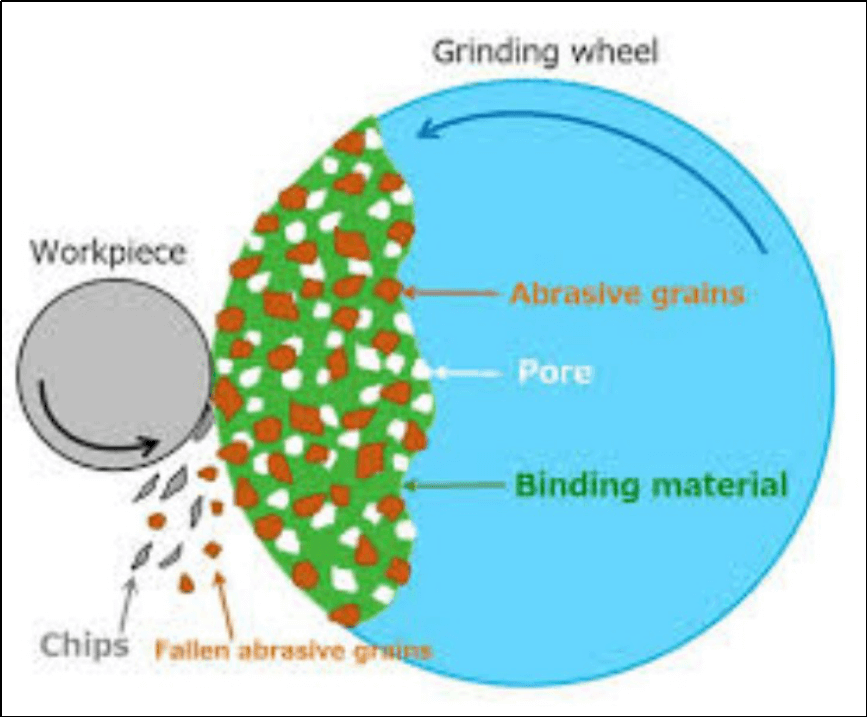
In the case of grinding, the grinding wheel carries small abrasive particles. This grinding wheel rotates through an electrical motor. When the rotating grinding wheel comes in contact with the workpiece surface, it removes small parts of the surface and gives the workpiece a smoother finish.
Il contatto costante tra la superficie e la mola provoca un attrito immenso. Questo attrito porta alla generazione di calore che contribuisce all'aumento della temperatura di entrambe le superfici. Questo aumento di temperatura spesso ammorbidisce il pezzo e facilita la molatura.
Il processo di saldatura:
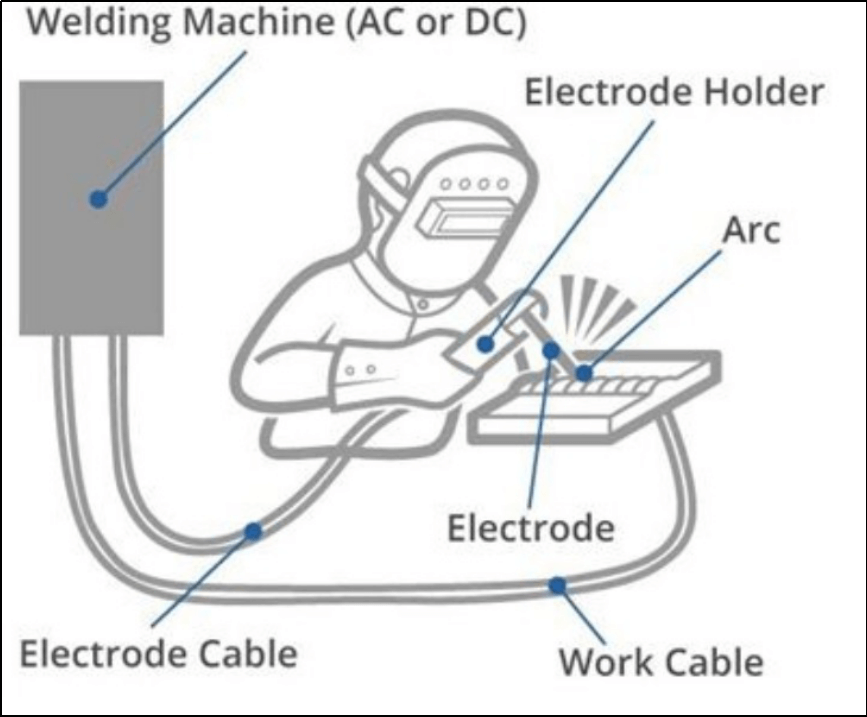
La saldatura è un processo che unisce due materiali simili per fusione. Si tratta di un processo a temperature estreme che fonde i due materiali originari dal punto di giunzione. Questa parte fusa dei materiali di base consente loro di fondersi. Il raffreddamento a temperatura ambiente forma una forte unione tra i due materiali di base. Questa giunzione a volte è più resistente dei materiali principali.
The most common materials involved in the welding process are Iron and Steel. Though plastics can also be joined by welding. Acetylene reacts with oxygen and produces a welding flame. The temperature of this flame could be as high as 6000˚C-8000 ˚C and beyond.
Physical Effects of Grind and Welding Process
The grind and welding process is a high abrasion, high-temperature processes. Thus, they cause the material to sustain some physical effects.
Tensile Residual Stress
Residual stress is the stress that resides in the material after the stress source has been removed. The grind and welding process leave behind significant tensile residual stress. This tensile residual stress can be harmful because it can lead to fatigue and structural damage.
Physical Effects of Grinding process.
The grinding process generates high heat in the grinding zone because it is high friction. This heat causes the temperature to increase in the zone. This increase in temperature affects the physical properties of the materials.
The material, grinding depth, and speed of grinding determine the temperature the surface reaches during the process. Hence, the temperature of the workpiece may reach up to 900 ˚C-1000 ˚C during the process.
Formation of chips
Il materiale in eccesso rimosso durante la molatura potrebbe accumularsi sulla superficie del pezzo sotto forma di trucioli. Ciò potrebbe influire sull'efficienza lavorativa della smerigliatrice e minare i risultati del processo. Questo è il motivo per cui l'operazione di molatura richiede un lubrificante. Lo scopo principale di questo è catturare le piccole particelle che la mola rimuove dalla superficie. E per evitare che si accumulino in superficie.
Integrità della superficie danneggiata
L'integrità della superficie è la condizione della superficie dopo che ha subito un processo meccanico. Le ricerche dimostrano che il processo di molatura porta alla formazione di uno strato di pezzi frammentati sul pezzo che riduce l'integrità superficiale del pezzo.
Perdita di magnetismo
Metals such as Iron are magnetic. Magnets tend to lose a percentage of their magnetism with every degree rise in temperature. This loss of magnetism may be reversible, irreversible, or permanent.
The temperature reached during the grinding process is very high in the grinding zone. If this process continues without a coolant, the magnetic material may end up losing its magnetism reversibly, irreversibly, or permanently depending upon the temperature.
Physical Effects of Welding Process
Welding being a high-temperature fusion process exposes the workpiece to extremely high temperatures. This heat is distributed in the vicinity of the welded joint.
Exposure to extreme temperature cause Heat-Affected-Zones (HAZs) to form near the welded joints. These zones are classified as part of the parent material that did not undergo melting yet sustained changes in their mechanical properties due to their proximity to the high-temperature welding zone.
Phase Transformation
Since welding involves melting and then cooling of the metal, the metal undergoes a structural change after first melting at high temperature and then cooling down to the ambient temperature. This change in the structure of the metal is called phase transformation.
Phase transformation not only changes the structure of metal but also alters its mechanical properties such as tensile strength, hardness, and ductility, etc.
Reduced Corrosion Resistance
Reduced corrosion resistance is often encountered in Heat-Affected-Zones (HAZs) in steel. This is because high temperature causes the Chromium present in the grain boundaries in the steel structure to precipitate leading to the reduced localized Chromium content. Since Chromium is highly corrosion-resistant, reduction in its composition can lead to Intergranular corrosion.
Hardened or Softened HAZ in the parent material.
The Heat-Affected-Zone (HAZ) in the parent material could become harder or softer than the parent material. This is due to exposure to extreme temperatures and depends on the properties of the parent material.
Both hardening and softening of parent material are unwanted. This is because a hardened material can lose its elasticity and become too brittle. And soft material can encounter ductile fracture.
EndNote
I processi di molatura e saldatura sono processi di valorizzazione del metallo. La molatura è un processo che utilizza la lavorazione abrasiva per tagliare una parte del materiale per renderlo più liscio. La saldatura, invece, unisce due materiali per fusione e fusione.
I processi di molatura e saldatura sono tali da comportare l'esposizione a temperature elevate. La temperatura può raggiungere i 1000 ˚C durante la macinatura. Durante la saldatura, può raggiungere fino a 10.000 ˚C e oltre.
Questo aumento di temperatura influisce sulle proprietà fisiche dei materiali che vengono rettificati o saldati. Il processo di molatura può influire sul magnetismo e sull'integrità superficiale del prodotto. Mentre la saldatura provoca una trasformazione di fase nel giunto che porta a cambiamenti nelle proprietà meccaniche a causa del cambiamento nella struttura.
Both these processes important to perform a number of Estrusione di plastica, Prototyping, Rapid CNC machining, Dewaxing Process and several other processes.


